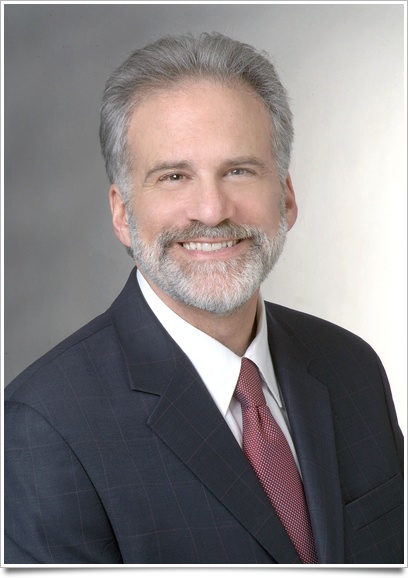
Cool Cleveland Interviews Cuyahoga County Prosecutor Candidates
As a service to the community, Cool Cleveland has invited all five Cuyahoga County Prosecutor candidates to respond to a series of questions prior to the primary election on Tuesday, March 6, 2012. Because no Republican candidates are running, the Democratic candidate with the most votes in the Democratic Primary on Tue 3/6 will become the next County Prosecutor. Responses to these questions will be reprinted verbatim, up to the requested limit of 350 words total.
First of all we need to stop simply using conviction statistics as the measure of the office’s success. We must finally recognize that the only significant measure of success of what we do is the extent to which our processes, policies and decisions help to reduce crime and make our community safer. If we do that, we will begin to recognize that not only is it incumbent on the criminal justice system to hold individuals accountable for their criminal conduct, but to also to have a meaningful impact toward assuring that the conduct will not be repeated and continue unabated. That means we must look beyond just processing cases faster and faster on the road to a felony conviction, but to expand our thinking into ways we can provide a more meaningful response to cases coming into the system.
The reform efforts to date have focused on finding ways to bypass the procedural steps at the municipal court level in order to move cases more swiftly through the felony system. Some of the resistance has been over concerns over the elimination of procedural safeguards as well as concerns that speed does not necessarily equate to justice and that the reform measures simply bypass the issue of system fairness.
My approach will be different. Rather no seeking to eliminate the municipal systems I will embrace them by shifting a sizeable number of lower-level felony cases directly into the municipal courts. There local judges with direct sensibility to the law enforcement issues in their communities can best provide a meaningful response to cases that can appropriately proceed in the misdemeanor system. Based on its pivotal role in the Cleveland community, the Cleveland Municipal Court has several well-developed justice system reforms – the Greater Cleveland Drug Court, the Mental Health Court, the Selective Intervention Program, and the Get on Track Program are good examples. Thinking more broadly on how to keep cases within that system without going to the Grand Jury will be one step toward a more fair, equitable and effective system of criminal justice.
During my tenure as Cleveland Law Director, I assisted Mayor Jackson in reforming the City’s Use of Deadly Force Policy which now allows for a review role by the City’s Citizen Review Board. I believe the role of the Board added to the public’s confidence the law enforcement and prosecutorial decisions were conducted appropriately and fairly. I believe the process we put in place was solid and the results in enforcing the policy during my tenure were exemplary. The fundamental issue inherent in the question is one of transparency. Transparency is critical to a healthy democracy and to a healthy justice system. With open and transparent processes, systems are less likely to experience pervasive corruption and are less likely operate arbitrarily and unfairly. Simply put, decision makers are more likely to do the right thing when they are part of an open and transparent system.
Transparency is also essential to building trust. I will build upon the transparency-related reforms already instituted by Executive Fitzgerald by working with his team to enact similar transparent processes in the Prosecutor’s Office. I am open to the idea of a review panel if that is the direction our collaboration takes us. At a minimum, I believe information from my office should be easily accessible with understandable statistics. Statistics relevant to death penalty prosecutions, racial fairness, and case outcomes will be annually reviewed, published and publically discussed as a matter of office policy.