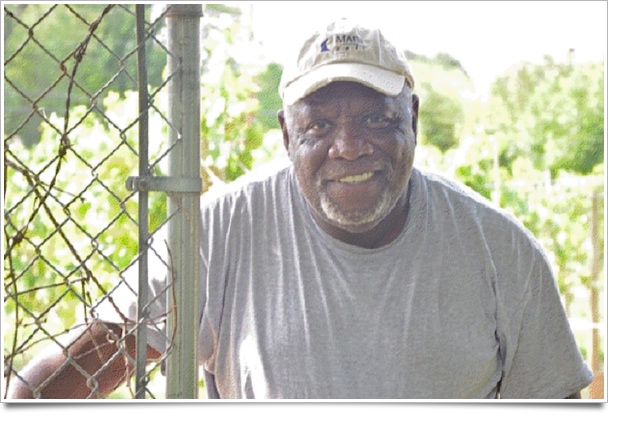
By Mansfield Frazier
Hilton Smith, the newly elected president of the Cleveland Chapter of the NAACP, referenced President Obama’s victory while making his first comments as head of that venerable organization. And indeed, he could have his hands as full as the president since Greater Cleveland has as many civil rights issues and social problems as any other locale in the nation… probably more than most. It will be interesting to see what direction the organization takes under new leadership.
Rev. Smith’s first pronouncements referenced economic opportunity and education … clearly two of the biggest concerns within the African-American community both locally and nationally. But those issues are similar to President Obama addressing climate change: Very worthwhile, but very, very long term.
If the NAACP sincerely wants to grow its membership by adding younger members, it might do better to focus on issues that concern young blacks’ right here and right now. Below is the article I had already planned to run this week … but it takes on more urgency in light of the NAACP elections.
We can only hope the wise elders who now run that 100+ years old organization will use their might to bring attention to this critical issue. Indeed, if fair treatment for minorities cannot be secured at basic levels, there is little hope of improvement in matters more complicated such as parity in economics and education.
Where Justice Begins
Most people mistakenly think justice in America is top-down in construct; starting with our Constitution and defined by the U.S. Supreme Court. And while those ideals and words are indeed noble, justice actually is bottom-up in construct; the “bottom” in reality being right there on the street when a citizen is stopped by a police officer for whatever reason. If citizens are not accorded their full rights, are treated in a biased or unfair manner at this juncture, all of the lofty language provided by our Founding Fathers for our protection means little since the average citizen has virtually no redress, no way to rectify any ill treatment they receive at the hands of an agent of the state.
The deck is stacked in favor of the government, and ever when someone (in this case Dr. Ronnie A. Dunn, an Associate Professor at Cleveland State University) attempts to shed much needed light on the subject of biased treatment of a certain segment of the citizenry, the protectors of the status quo often prefer that darkness prevails.
Back in 2009 a study was commissioned by the Cuyahoga County Prosecutor’s Office to examine racial disparities within the Cuyahoga County criminal justice system. Dr. Dunn, who teaches at the Maxine Goodman Levin College of Urban Affairs at CSU, was a member of a CSU research team along with members of the Criminology Research Center that were contracted to examine the use of police discretion by officers within jurisdictions in Cuyahoga County. There were two components to the research conducted by the CSU team. That conducted by the Criminology Research Center utilized police ride-alongs to examine the use of police discretion in the cities of Cleveland, Shaker Heights, Brook Park, and Westlake. These cities were selected based on their varied racial and socioeconomic demographic characteristics.
Dunn’s component of the study (utilizing accepted scientific methods) examined “the traffic law enforcement practices within the same cities by analyzing the traffic ticketing distribution patterns in each jurisdiction.” Dr. Dunn’s report states that the, “Police are the primary point of entry into the criminal justice system and the most frequent interaction the average citizen has with the police comes in the form of traffic stops.”
Research consistently shows that blacks and other minorities are more likely to be stopped, detained, questioned, and cited by police than whites, which has given rise to an increase in allegations of racial profiling over the past years. Blacks in Cleveland comprised 38.4 percent of the driving population and received 59 percent of the traffic citations while whites who were 54.8 percent of motorists received 33 percent of the traffic tickets; other minorities were 6.9 percent of the driving population and received 7.51 percent of the citations. Blacks were 2.55 times as likely to be ticketed by police as whites, and other minorities were 1.80 times as likely to be ticketed in comparison to whites.
In the city of Shaker, which is perceived as one of the most inclusive and tolerant cities in Cuyahoga County, Blacks were 35 percent of the driving population and received 62 percent of the traffic tickets, while whites were 58 percent of the motorists and received 36 percent of the tickets and other minorities were 7 percent of motorists and received 2 percent of the tickets. Blacks received 1.76 of their proportional share of tickets and were 2.86 times as likely to be ticketed by police as whites in Shaker who received 62 percent their proportional share of tickets. Other minorities received 35 percent their proportional share of tickets and were 58 percent as likely to be ticketed as whites in the city.
The study can be accessed online here. It cites an abundance of other data that found significant patterns of bias in traffic enforcement practices.
This bias has a number of negative effects, according to Dr. Dunn. “It creates a significant financial burden on those that are disproportionately the subject of these biased enforcement practices, and erodes police/community relations, especially within African American and minority communities.”
The latter can be particularly harmful in light of recent increased efforts to attract highly educated immigrants to the Greater Cleveland area. Word of unfair treatment can spread like wildfire throughout these tightly-knitted communities, causing us to lose out on talent that can help rebuild our economy. Folks with options will tend to end up in welcoming environments, not where they feel they might be targeted due to their skin color.
However, the study which was paid for with public tax dollars has languished in someone’s desk drawer and not received the public exposure it warrants. Those in positions to put an end to these racist practices including the mainstream media simply pretend the work was never done … that the study simply doesn’t exist. Legislation needs to be enacted at local, county, and state levels … and elected officials (including the county prosecutor, county executive and members of the County Council) need to use their authority and resources to induce jurisdictions to enact legislation throughout the county.
The only way to correct the practice is to require uniform collection of racial demographic data on all traffic stops (not just those resulting in tickets), analyze and then report the data to the public on a regular basis. If we are serious about moving the region forward we have to insure fair treatment for all citizens when they interact with governmental authority. This is an issue worthy of the attention of the new NAACP leadership — their response will be indicative of what we can expect going forward from an organization with such a great history and legacy of championing just causes.
 From Cool Cleveland correspondent Mansfield B. Frazier mansfieldfATgmail.com. Frazier’s From Behind The Wall: Commentary on Crime, Punishment, Race and the Underclass by a Prison Inmate is available again in hardback. Snag your copy and have it signed by the author by visiting http://www.neighborhoodsolutionsinc.com.
One Response to “MANSFIELD: Moving Forward”
IndyCA35
This is your dumbest column.
If the blacks are 38% of the drivers and get 58% of the citations, maybe that’s because they commit 58% of the violations. You can’t get a citation without violating the law. Duh!
By the way, who paid for this “study?” We taxpayers, I’ll bet. Do the blacks pay 38% of the taxes? Uh oh! The reverse race card. What’s sauce for the goose is sauce for the gander. Should we have racially proportional taxation?