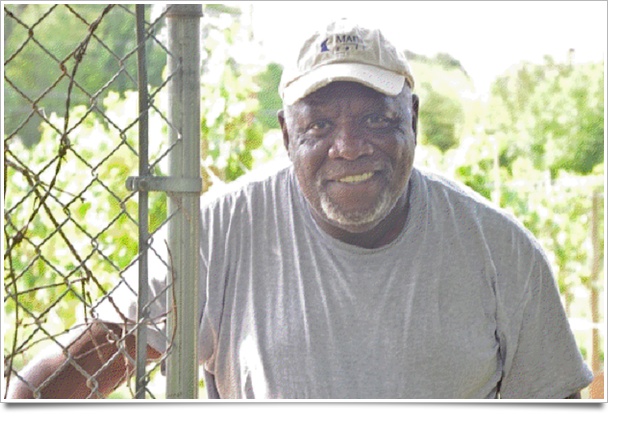
By Mansfield Frazier
Cleveland’s Ward 2 councilman Zack Reed expanded on the vision set forth by three members of Congress — Marcia Fudge, Marcie Kaptur and Dave Joyce — who held a press conference last week to announce they are set to introduce a bill, H.R. 656, the “Restore Our Neighborhoods Act” in this session of Congress. The measure would allow land banks across the country to issue federally-backed bonds to pay for demolition of vacant and abandoned homes, as well as blighted properties, without an increase in taxes.
If passed, the bill would go a long way in terms of stabilizing damaged and struggling neighborhoods. According to the 2010 Census, “non-seasonal vacant properties have increased 51 percent nationally, from nearly 7 million in 2000 to 10 million in April, 2010.”
These vacant properties attract crime, destabilize communities and lower the value of other homes … those nearby and in the wider community. We all lose. Studies have shown that the remaining homes in some cities lose as much as $17,000 in value. Removing these eyesores would aid greatly in terms of helping urban communities financially rebound from the mortgage meltdown not of their own making.
We currently have 9000 homes in the demolition pipeline in Cleveland alone, and another 6000 waiting in line, according to Mayor Jackson, who also was at the press conference. At a cost of $8000 each to demolish a home — you do the math.
Councilman Reed said the welcomed measure could present cities like Cleveland with a grand opportunity to re-invent entire neighborhoods if foresight is exercised and out-of-the-box thinking is engaged in … but it takes smart urban planning. In Detroit, block after block of homes were demolished with little thought given to what would come afterwards.
The sustainability and urban farming movements sweeping parts of the country could prove to be a boon for us here in Cleveland, said Reed. Instead of simply winding up with a surfeit of vacant lots like Detroit, we could create wealth-building, job-creating urban homesteads by selectively tearing down some homes and rehabbing others.
Streets like E. 144th between Kinsman and Barlett in Reed’s ward offers an excellent example. Some of the worse homes have already been demolished, and others are waiting for the wrecking ball. But instead of simply tearing them all down, some could be turned into urban farmhouses, where the adjacent land is put under the plow and hoop houses and BioCellars (like the one we’re planning to build in Hough) could extend the growing season to year-round.
Will Allen, the urban farming guru of Growing Power in Minneapolis, is already mentoring a project in the “Forgotten Triangle” in Cleveland’s Kinsman neighborhood called Rid-All Green Partnership, which is proving to be very successful at growing healthy, nutritious food for locovores. Allen, a McArthur Genius Award grant recipient, has developed urban farming techniques that, properly managed, can generate in excess of $100,000 per acre of vacant urban land.
At a seminar he put on in Cleveland last year, he stated it’s all about creating enriched soil by composting … something Ken Haddon (who was raised on a farm near Columbus and formerly owned a garden center on Cedar Road) has been advocating for years. I can personally attest to this method of growing since the grapevines I planted back in 2010 grew at an astounding rate using compost Haddon generously gave us.
When the vines were first planted I asked the viticulture expert hired by the Ohio State Extension Service how tall the foot-high plants might grow in the first year, and he stated that with a bit of luck they would grow four or five feet; however, most of them grew to over 10 feet the first year. When people ask me what I used on them, I cryptically answered, “that old black magic” as if I had some arcane knowledge known only to myself … when what I was really talking about was the rich black soil.
One of the stumbling blocks in the way of urban agriculture has to do with perceptions … some of them, I hate to admit, slightly racist. It’s hard for some folks to wrap their minds around the notion that excellent crops can indeed be grown in the inner-city. Sure, there are some elevated levels of lead (from years of using lead-based paint on the homes … it tends to flake off with time) in the soil but my partner, biologist Jean Loria, is aware of remediation techniques that do an excellent job of cleansing the soil so that when compost is mixed in, the crops literally shoot out of the ground.
To paraphrase the hamburger commercial from a few years ago: People gotta eat … and why should we continue to truck bell peppers across country from California, belching diesel exhaust fumes all the way when the technology now exists to grow our own food locally? If you’ve never tasted a freshly-picked bell pepper … you really don’t know what you’re missing.
Cleveland already is in the forefront of the urban farming movement; local projects abound. We simply need to take note of them, and then take note of what Councilman Reed is proposing … to request that a portion of the bond money be used to build up communities … as well as to tear vacant houses down. This can truly be win-win.
 From Cool Cleveland correspondent Mansfield B. Frazier mansfieldfATgmail.com. Frazier’s From Behind The Wall: Commentary on Crime, Punishment, Race and the Underclass by a Prison Inmate is available again in hardback. Snag your copy and have it signed by the author by visiting http://www.neighborhoodsolutionsinc.com.
6 Responses to “MANSFIELD: Expanding The Vision”
Anastasia P
Great article, Mansfield. It’s amazing how quickly the idea of growing in the city is taking hold here. And green pepper ain’t got nothin’ on a tomato freshly plucked off the vine and popped in your mouth!
IndyCA35
Urban farming? All the thousands of farmers in Ohio–and agriculture is the state’s largest industry, will be happy to realize they can now earn $5,000,000 on their little 50 acre farms, and without any lead remediation.
If this were true, we could not need HR 656 to pay for demolition. Corporations and farmers would gladly do it to convert Cleveland into farm land. It isn’t and they won’t.
Show us a single instance in any city where an “urban farm” has yielded enough revenue to pay for the demolition, farming expenses, et al. Until you can do so, I cry “Fraud.”
mansfield
Check out Will Allen’s “Growing Power” … he got a MacArthur genius grant for the techniques he’s developed (which he says doesn’t translate all that well to larger farms).
You, on the other hand, got a genius grant for what? Nay-saying? Sorry the world is passing you by.
Marcia
Aren’t federally-backed bonds actually a debt that has to be paid at a later date? Not saying that getting money from anyplace to demolish these properties is not a good idea. But want to be sure that readers know this is not FREE money by any means just because it’s not a tax. I’m all for getting these properties down as fast as possible.
mansfield
First, study Will Allen’s techniques, these are his figures and he uses a variety of methods, including aquaponics to maximize dollar yield per acre. Take a visit to Growing Power in Minneapolis and be prepared to be totally amazed at what he’s doing on a very small plot of land. He didn’t earn that genius grant from the MacArthur Foundation for nothing. Large farms simply cannot utilize his methods, which, admittedly, are very labor intensive. He’s not just planting seeds and then harvesting them,
And then do the simple math on what a vineyard a one-acre vineyard can produce at an average of $12 per bottle. But with proper marketing and building brand recognition (as we have been busily doing) we will be able to sell our wines at above average prices, perhaps far above average. It’s all about the trope when it comes to wine.
As for the bonds, or course they will have to be repaid … all bonds have to be paid off; I’ll address the financial part in an upcoming column.
bob
HR 656…ANYTHING to clean it up,give some hope to those folks and get on with it….SOME sense of normalcy…NOT trying to get into race,politico issues,etc. Just saying… IF can do some good with land and get good produce,wine from it all for THAT toooo…..LEAST someone TRYING…and if transportable idea wise hey all to the good..