By Mansfield Frazier
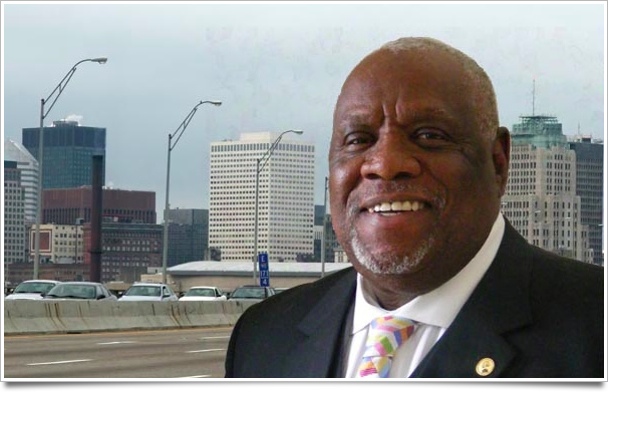
Due to the fact tensions between Cleveland Mayor Frank Jackson and Ohio Attorney General Mike DeWine have reached a boiling point in regards to the 137-shots incident, I requested and was granted an exclusive, one-on-one interview with Cleveland’s embattled — and now combative — mayor.
To briefly recap the incident, over 60 Cleveland police vehicles chased what turned out to be two unarmed suspects, Timothy Russell and Malissa Williams, into East Cleveland where they were cornered in a school parking lot. Thirteen Cleveland police officers (12 of which were white, the other Hispanic) fired 137 rounds at the vehicle, striking each of the victims over 20 times. It should be noted that other officers from Cleveland and different jurisdictions were on the scene but none of them discharged their weapons.
Since the shooting took place in East Cleveland, it was up to the police from that city to conduct the investigation into the shooting, while the City of Cleveland would conduct the investigation into the chase itself. East Cleveland, in a move that was considered wise by all at the time, asked the Ohio Bureau of Criminal Investigation (BCI) to lead their part of the investigation.
How BCI carried out its investigation, the conclusions DeWine came to, and how he released those conclusions is now the bone of contention between the attorney general and Mayor Jackson.
“The attorney general blatantly violated due process,” Jackson said in the interview. “His job was to gather the facts and then turn them over to the county prosecutor, who, by law, makes a determination in terms of how to proceed. He’s to decide if enough evidence exists to take the cases to a grand jury. But what DeWine did was to announce his opinion that the police did nothing wrong. He stated as much to me in a 20-minute phone call, in which he said that if he were the prosecutor he would not seek indictments. By doing so he’s tainted the process, and I’m hopeful that the U.S. Department of Justice will take a close look at what he’s attempting to do.”
DeWine, however, said in a brief phone conversation with me that his comments won’t impact any decision the county prosecutor might choose to make, and that he released his statements merely to calm the public. He also said he doesn’t recall telling Mayor Jackson that if he were the prosecutor he wouldn’t take the cases to grand juries.
Jackson continued by pointing out that, in his opinion, BCI investigators did a poor job of interviewing the officers involved in the shooting incident. “Their investigation was deeply flawed. They didn’t ask probing questions; you could see it right on the videos. It seems as if their goal right from the beginning was to blame the victims, thereby absolving the officers of any wrongdoing,” he said.
He continued by stating, “DeWine wants to shift any blame from the officers and put it on what he calls a ‘failed system,’ simply because he knows a ‘system’ can’t be indicted. He’s totally ignoring the fact that some officers knowingly broke the rules by not following established policies and procedures, and they’ve publicly admitted as much. But instead, DeWine wants to shift the blame to Police Chief Michael McGrath for somehow failing to do his job. The reason he’s attempting to do this is because the Chief McGrath would not go along with his assessment of the situation. The chief was focused on holding those who did wrong accountable, but DeWine believes none of the officers did anything wrong.”
The mayor strongly suggests that DeWine was purposeful in his actions, setting up a situation whereby justice can never be meted out since anyone accused can always use the defense that prejudicial information has already been released, thus denying them the opportunity to have a fair and untainted trial.
When I asked Mayor Jackson if he thought this type of attempt to protect police officers from facing the consequences of their actions was reflective of the larger issue of how policing is too often carried out in America, he responded by saying it’s reflective of power in America, and the relationship of certain people in regards to that power.
“Remember, I’ve always said it’s never what happens that really matters — no matter how egregious it is or how favorable it is — it’s always about who it’s happening to that matters. Because if it happens to certain groups of people there’s always the call of ‘where’s the justice?’ but if it happens to someone from another group of people, it’s always ‘they deserve what they got,’ what happened to them they brought on themselves. As in this case at hand, these two people, because they allegedly were drug abusers, and the woman was a paranoid schizophrenic, it’s evidently O.K. what happened to them. The attorney general’s office would have cared more about two dogs, if they were shot over 20 times, than they cared about these two human beings.”
Jackson continued with his comments about power in America. “In the structure of power in America you always have law enforcement, like you have military, and it’s always about who controls the structure of power. And if you challenge that power structure, like my police chief did when he wouldn’t go along with DeWine’s flawed conclusions, he began to catch hell.”
When I asked Jackson about the investigation into the Cleveland Division of Police recently launched by the Civil Rights Section of the U.S. Department of Justice, he said that he welcomes the oversight. “If we’re doing something wrong I’d like to know about it, and on the other hand they could reaffirm what we are doing right,” said Jackson.
In conclusion Mayor Jackson said, “Systems and cultures have a life of their own, and part of this is rooting out the negative part that’s not conducive to serving people. What’s needed is fair and equitable delivery of services, that’s always the goal. But people will behave like someone on probation or parole … as long as someone is watching they’ll do the right thing. My hope is that after the feds leave our police culture will be changed for the better. You know the vast majority of our officers are fine, hard-working public servants. It’s those few that do wrong and hide behind that blue line for protection that we have to ferret out, and the good officers have to stop protecting the bad ones with their silence and support.”
 From Cool Cleveland correspondent Mansfield B. Frazier mansfieldfATgmail.com. Frazier’s From Behind The Wall: Commentary on Crime, Punishment, Race and the Underclass by a Prison Inmate is available again in hardback. Snag your copy and have it signed by the author by visiting http://NeighborhoodSolutionsInc.com.
2 Responses to “MANSFIELD: A Candid Conversation with Cleveland Mayor Frank Jackson”
Paul D. Lewis
Good work.
Brandon
Mansfield,
I just don’t understand how your article fails to hold the mayor accountable for this systemic failure. If the Mayor of Cleveland plans to blame a few rogue cops and not question the department at large, then he is either disillusioned or incompetent to lead the city of Cleveland.
I sincerely hope the people of the city of Cleveland will wake up and not reelect Frank Jackson simply on the principle that he cannot tame the police department for making erroneous decisions like the incident where the officers used excessive force. Your article points out how only Cleveland Police unloaded their guns which demonstrates to me the police were in no immediate danger and that excessive force could have been prevented if the officers used better judgement.