 Wed 1/22
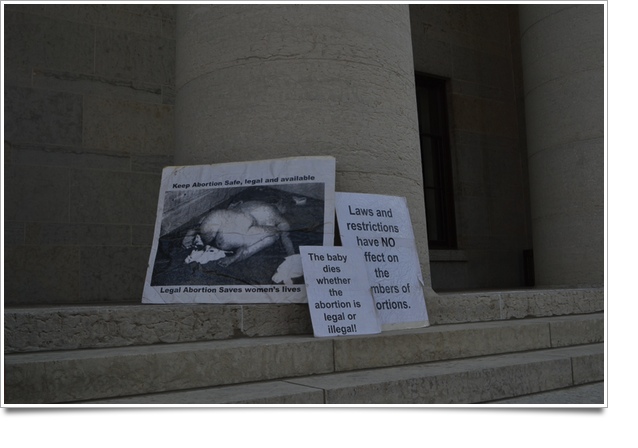
Forty-one years ago, the U.S. Supreme Court issued what’s probably its best known decision, likely the only one many Americans can name — Roe v. Wade. That was, of course, the decision that guaranteed the right for a woman to choose abortion, a key option in giving a woman control over her own body and her life.
It’s a decision that’s been under siege every since — for reasons both sincere and, more often these days, duplicitous and misogynistic. (The recent ramping-up of attacks on access to affordable contraception, the most effective way of decreasing abortion, exposes the insincerity of many anti-choice zealots.)
The last session of the Ohio legislature saw it jam a cluster of anti-choice provisions into the biennial budget bill — not only an inappropriate use of a must-pass bill that allocates state spending but also done less than 48 hours before the vote without hearings or any public discussion, a sign that proponents understood what they were doing wouldn’t stand up to public scrutiny.
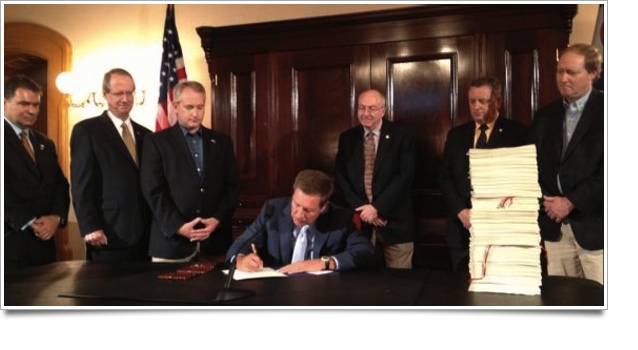
The bill was signed into law by Governor Kasich late on a Sunday evening. The photo of him doing so surrounded by six other middle-aged white men and no women, taken by Columbus photographer Karen Kasler, has gone viral and become iconic for pro-choice Ohio women.
The clandestine nature of the passage assured that there would not be the type of blowback caused by the public passage of anti-choice legislation in Texas — blowback that has propelled state legislator Wendy Davis into being a viable candidate for governor of Texas.
Apparently emboldened by the lack of the sort of massive demonstrations that took place there, Ohio legislators are now proposing even more stringent restrictions, taking away women’s choices in increments.
What’s especially offensive about this approach is that control over their lives is taken almost entirely from poor and working women — the result of making abortion costlier and more time-consuming, requiring travel, time off from work, or expensive, medically unnecessary, testing. These laws set up obstacles that affluent women can breeze past with minor inconvenience.
That same legislature has failed to pass meaningful legislation that will help the children it wants to force non-affluent women to have. For instance, still unaddressed is the issue of Ohio’s inequitable school funding, declared unconstitutional (for the first of several times) by the Ohio Supreme Court in 1997. And the legislature continues to drain resources from public schools and redirect them to failing for-profit charter schools that too often leave their students far behind.
Meanwhile in Washington D.C., Congress is debating yet another assault on women’s freedom, taking up a bill that would bar insurance companies from selling private insurance covering abortion to women who want to purchase it with their own money. A proposed substitute bill that would protect pregnant women from job discrimination was dismissed. The people interested in forcing women to have children they don’t want are also working to make it difficult or impossible for them to care for these children.
On October 2 of last year, more than 1,000 women gathered in front of the statehouse in Columbus for a “We Won’t Go Back” rally, telling the state legislature that its priorities were out of whack. The rally was emcee’d by Dayton area attorney and two-time candidate for Congress Sharen Neuhardt.
Last week, Democratic candidate for governor Ed FitzGerald announced that Neuhardt will be his running mate. This news has electrified and energized Democratic women from around the state. Thanks to the ongoing attacks on women’s reproductive freedom, an issue that once primarily motivated people on the anti-choice side has become a rallying point for many women who thought that Roe V. Wade had settled the issue of who gets make a woman’s childbearing decisions — herself or the government acting on behalf of religious beliefs she might not share.