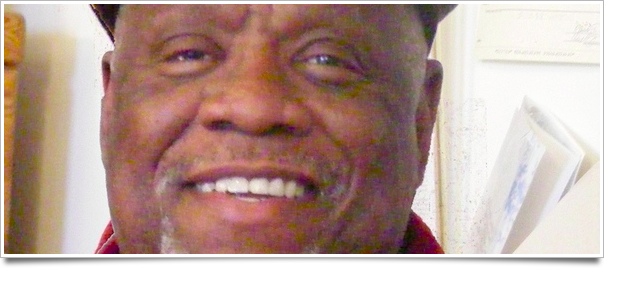
By Mansfield Frazier
While we, as a society, haven’t completely turned the corner in regards to addressing the problems and challenges of returning citizens — those folks coming home from periods of incarceration — we are indeed making some progress.
Last week over 200 people crowded into a meeting room at the Northeast Reintegration Center (the woman’s prison on E. 30th Street and Orange Avenue) for a Faith Summit, designed to explore ways in which religious organizations can assist the Ohio Department of Rehabilitation and Correction (ODRC) in fulfilling its mission of turning lives around and further reducing recidivism. It appears the current administration is more amenable to listening to members of the community as they formulate programs and attempt to devise solutions than previous ones.
Historically few, if any, officials at corrections departments anywhere in the country listened very much to anyone from the outside; by design penal institutions are very insular, and not very amenable to change, or even suggestions for change.
But that mindset is being altered as state budgets across the country tighten, and the moral conscience of the nation has finally been pricked as more and more people ask the legitimate question: Why do we, per capita, warehouse more of our fellow citizens behind bars than any other country on the face of the Earth?
One of the more interesting aspects of the Faith Summit is that it came about by virtue of a suggestion from an “outsider.” Attorney Michael Cheselka (as a matter of full disclosure, Michael is a close personal friend and my family attorney) suggested the Summit because of his intimate knowledge of the challenges faced by returning citizens, and, perhaps more importantly, due to his being married to Common Pleas Judge Nancy Margaret Russo, who, for the last five years, has done an outstanding job of presiding over the County Court’s reentry docket.
When it was Cheselka’s turn to address the audience he wasted no time and minced no words in reminding everyone that Jesus, in addition to admonishing the faithful to feed the hungry and clothe the naked, also said to visit those in prison. In other words, true Christians should not pick and choose which duties they are to fulfill.
And, while faith certainly can have a positive impact in the cogitative restructuring process all prisoners must undergo if they are to be successful after their release, many prisoners have had little, if any, religious training or exposure prior to incarceration. The Summit was designed, in part, to rectify that situation.
Nonetheless, the biggest challenge facing returning citizens is not finding a church to join upon release, but securing gainful employment. The formerly incarcerated persons who spoke to the group stressed that point again and again.
Perhaps one way the members of the faith communities that were in attendance can enhance their efforts in regards to stabilizing lives of those persons returning home is by closely examining what and how the Muslim community does in terms of assisting its adherents in becoming successful after their release.
Due to my almost 30-year criminal career, and my work in reentry over the last decade, I probably know as many returned citizens as anyone in the country. That’s neither a boast nor a matter of shame, just a plain and simple fact of my past.
And, while I’m not of that faith (nor am I a Christian for that matter; I pray to another God) I’ve never known a serious, devout Muslim to struggle once they exit prison. The members of the Muslim faith always — and I do mean always — surround those returning from prison and make them whole … in every sense of the word, including financially. Additionally, recidivism is exceptionally low — virtually unheard of — among the followers of Allah.
Christians should take note and learn how to replicate these noteworthy and effective efforts at reintegration.
What the Muslim community is aware of is the simple truth that the mainstream job market will never solve the employment problems of returning citizens of color (whites don’t struggle nearly as much with employment issues upon their release). For a variety of reasons that actually have little or nothing to do with a criminal background, blacks find it much more difficult to secure employment. Muslims understand this and don’t expend much effort attempting to change this aspect of American culture. What they do instead is find alternative ways to help returning believers stabilize their lives.
Another speaker on the agenda was a minister who works for a company called Millwood; they manufacture pallets and other material-handling equipment. And this faith-based Christian company makes a concerted effort to hire returned citizens, and are quite successful in their mission. Making efforts to replicate companies like Millwood is a far better use of time and energy than to continually expend an inordinate amount of effort on failed attempts to drag mainstream employers kicking and screaming to the hiring table.
Other companies, like Rid-All Green Partnership in the Kinsman neighborhood, are attempting to replicate the success of Millwood. They are creating jobs in the nascent urban agriculture industry, and among their endeavors are fish and freshwater shrimp farming. And they’re looking to grow their operation. ODRC’s Marion Correctional Institution has aquaponics training classes where prisoners learn how to raise fish in ponds. Seems like a natural fit for those exiting prison and returning to Cleveland, right?
The problem is, ODRC still has such a cumbersome bureaucracy, the operators of Rid-All can’t seem to navigate it. It would be indeed interesting to see if the folks from the faith community can help to make this marriage between opportunities and need happen. The nascent green movement can eventually create thousands of new jobs in the inner city … some of them seasonal, others year-round, but real jobs nonetheless.
* * *
Two researchers with Cleveland’s Federal Reserve Bank, O. Emre Ergungor and Nelson Oliver, recently posted an “Economic Commentary” entitled ”The Employability of Returning Citizens Is Key to Neighborhood Revitalization.” Their paper identifies some of the “many roadblocks stand[ing] between a job and those coming home from prison” and identified a lack of education as a key barrier to employment.
Too many undereducated prisoners still eschew GED classes and skills training programs in favor of shooting hoops, playing Spades, watching TV or simply laying up in the rack; but convincing them to use their time behind bars wisely is difficult, and probably can’t be accomplished by missionaries from the outside, no matter how well-intentioned their efforts.
However, ODRC just may be changing enough to institute a program that has a great chance of working: Peer mentoring. Having recently released prisoners — who have strong street creds — step to these young men as soon as they set foot inside the prison and serve as their mentors. Give it to them straight, no chaser.
The problem of course is the strong institutional mindset of: “since you were once incarcerated we don’t want nothing to do with you.” But, again, that may be changing.
In less than two months Jaron Jackson, who went to prison nine years ago as an 18-year-old (for furnishing a 17-year-old a gun that was subsequently used to shoot and kill an 11-year-old child), will be released. He spoke from his heart at the Faith Summit.
For his first four years behind bars he was a problem prisoner, but then something clicked, he got with the program, and has made tremendous strides in terms of turning his life around. If anyone can interact with youthful incoming prisoners, mentor them, and successfully encourage them to use their time wisely, it’s Jaron Jackson. I pray that ODRC gives him the opportunity to help.
Here’s another idea whose time might have come: Take one — or two — prisons and turn them into educational institutions, where every person there spends their days learning … from GED, to marketable trades, to college courses.
The logic is simple: Young people going into institutions are easily influenced by other prisoners, so if a young person actually was of the frame of mind to obtain additional education while behind bars, when other prisoners ridicule the idea, the new prisoner will opt to go along with the crowd and thereby remain uneducated. But if everyone at the institution was on the same page, getting an education, the outcomes could be amazing.
Of course ODRC officials would have to be sensitive to the public and lawmakers who would demand, “Why are you educating those people when others out here have to struggle to pay for college?” The simple answer is to give prisoners student loans, repayable after they exit prison and obtain gainful employment.
Yes, there are answers, but the overarching question is one of timing. While we’ve made some positive strides in terms of preparing prisoners for reentry, we still have a long way to go. But the Faith Summit provided hope that we’re on the path to eventually getting to where we need to be on this critical issue.
 From Cool Cleveland correspondent Mansfield B. Frazier mansfieldfATgmail.com. Frazier’s From Behind The Wall: Commentary on Crime, Punishment, Race and the Underclass by a Prison Inmate is available again in hardback. Snag your copy and have it signed by the author by visiting http://NeighborhoodSolutionsInc.com.