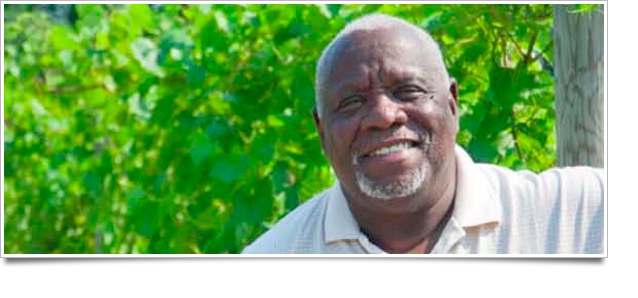
By Mansfield Frazier
How does it feel?
To be on your own
With no direction home
Like a complete unknown
Like a rolling stone
–Bob Dylan, “Like a Rolling Stone”
When a story ran in the Plain Dealer recently regarding a man who had taken an abandoned house and turned it into his home, it reminded me of a place I once knew, almost two decades ago, not far from the heart of downtown Cleveland.
It was a place where the destitute, the down and out, the homeless, and the mentally ill — those we oftentimes see wandering our streets blank-eyed — could (and did) go that was all their own. To them, it meant they didn’t have go into a city or county-run shelter to escape the elements or get a bowl of soup.
It was called Camelot, and it existed right on the edge of the Hough neighborhood, at E. 53rd on the north side of Chester Avenue. The once handsome three-story building, made of large glazed white tiles, was once home to the famous Hough Bakery, but it had sat abandoned for years until homeless squatters quietly moved into it back in the late ’80s.
I’d heard whispered rumors about Camelot for years, but didn’t know the location, or if it really existed outside of someone’s mind. A number of things struck me about the name: Obviously someone had a wry sense of wit and irony, not to mention they were somewhat literate. And I wasn’t sure if the name was supposed to evoke the magical castle and court associated with the legendary King Arthur, or of the almost mystical era associated with the Kennedy clan. Either way the name denoted a special place with a special meaning for a somewhat disparate group of people.
We tend to think of street people only in terms of how they appear in the here and now, forgetting they were not always this way. Like everyone else, at some earlier point in their lives they had dreams, aspirations and maybe even stable lives … similar to the rest of us.
Once I gave my word that I would not write about this alternate world inhabited by those on the far margins of society (but since it no longer exists I feel as if I’m now released from that vow) I was allowed in to take a tour and talk to a willing few of the 40 or 50 men and women who called the four story building home from time to time.
They were very secretive because they feared that if government officials (say, someone from the Health Department) discovered their hidden hideaway they would be evicted. The egress was from a little-used side street, Perkins Avenue, thus further protecting the anonymity of the place. But Camelot wasn’t totally unknown to the outside world since a few kind souls— no one knew who they were since supposedly no one had ever seen them — discretely dropped off food packages and toiletries on a somewhat regular basis.
Among the scariest words in the English language is: “I’m from the government, I’m here to help you.” Indeed, some folks (surprise!) want nothing to do with any kind of help from any form of government, which makes them true libertarians I suppose. True, some are fighting personal demons such as alcoholism, drug addiction and mental illness, but, whatever their reasons, they’ve opted to go it alone, totally underground, completely off the radar.
Sure, they’re still dependent on some forms of societal largess, such as meals from food kitchens and free clothes (some, I suspect, even got disability checks), but they do this on their own terms, and thereby maintain their own version of a sense of dignity — which, admittedly, may be totally different from yours or mine.
When I was allowed into Camelot — I was accompanied by a “resident” I’d known for over 40 years, we’d finished high school in the same class — to talk to the inhabitants, the one constant refrain I heard over and over was they didn’t want to have to reside in a shelter, with all of the rules, regulations, noise — and to them, dehumanizing controls; they preferred to maintain this last shred of self-reliance. After all, isn’t this one of America’s founding principles: self-reliance?
The fall day I visited, the temperature was hovering around 40 degrees, and two warming fires were providing heat from wood pallets being burned in rusty old 55-gal steel drums. The space was clean and neat, even if the meager furnishings were threadbare, somewhat the worse for wear.
A number of the individuals sitting on the makeshift benches and castoff chairs were women, which at first surprised me. Their reason for being in Camelot was simple: they felt sexually secure in the environment … much more so than being on the streets.
The residents — a rainbow mixture of black, white and others who could teach lessons on peaceful co-existence since I didn’t perceive a hierarchy based on race or skin color — established the rules of conduct, enforced them, and everyone had an equal say. It was a pure democracy, based on the notion of the commonweal and no one was allowed to take advantage of anyone else, sexually or otherwise. Food, chores, reading materials — everything was shared in an egalitarian environment the residents had turned into an oasis of calm in a world they found maddening outside the walls of security they’d established and maintained for themselves. There was a sense of serenity and calm about the place that was almost palpable.
One woman, she must have been in her mid-60s or early 70s — but how was I to know since the streets often exact a brutal physical toll — proudly showed me a tattered picture of her two grandchildren who lived out in Medina. “My daughter and son-in-law, they don’t want me around ‘cause I sometimes drink and talk a little crazy… so they send me a small check every month or so, just as long as I stay away,” she said, with a wistful, far away look in her eyes. She then brightened up as she said, “The only reason I haven’t committed suicide is just to spite them, and because I got me another family that cares about me right here.”
A rickety bulletin board (it once served as a child’s easel) had notices tacked onto it informing residents of which churches were giving out hot meals on which days, and other information on healthcare and clothing. There also was a notice of a group council meeting that was set for later in the week.
Certainly, as to be expected, there were a few troubled individuals setting off alone, mumbling incoherently to someone only they could see … perhaps the ghost of a long lost family member, a barely remembered lover, or the demons that have pursuing them for years. But they weren’t bothering anyone … and more importantly, no one was bothering them. The space was plenty big enough; there was room to accommodate everyone.
I didn’t stay overly long; I didn’t want to be viewed as an intruder, an interloper, or a voyeur. But as I left there were tears in my eyes that I couldn’t understand or explain, neither then nor now.
Perhaps Camelot put me in mind of the hobo camps my father had told me he resided in for a spell while riding the rails as a teenager back in the earlier part of the last century, after he had to leave his home in Louisville because he’d killed a white youth with a baseball bat in a fracas for dishonoring his father and younger sister; perhaps the scene had evoked the memory of the time I was very close to being homeless myself in New York City after going through a very rough patch in my life after tragic deaths of loved ones that came too close on the heels of each other; or it might simply have been that I was so deeply touched at how freely the milk of human kindness flowed from these wretches who had so little, but unstintingly gave so much without expectation of recompense. I’m just not sure what caused the tears, but they felt good, soul-cleansing, rolling down my cheeks.
It turned out the fears of the residents of Camelot were valid: In the late 1990s the building was razed, but I’m almost sure city officials didn’t know that dozens of homeless folks has taken up residence in it, almost in plain sight, but not quite.
The stated reason for the demolition was “development,” but the site sat empty until 2013 when ground was broken for a new police precinct building. Personally, I think the hulking white edifice was an embarrassment to city officials … an offense to the eyes of some commuters as they drove past on their way to their downtown sinecures — but, in truth, I really don’t know.
But I do know that once Camelot was no more the number of homeless people sleeping on heated grates around 9th and Superior increased somewhat dramatically. In 2002 I asked then-Mayor Jane Campbell a question: if homeless people took over an abandoned building and occupied it, would they be left alone?
“No,” she replied, “we simply couldn’t ignore something like that … health reasons and insurance concerns would force us to do something.”
What, I wondered; something like “helping”? They were already equipped to help themselves quite nicely … that is, before governmental intervention. Certainly the average citizen would back away in horror from such an existence, but others would be more compassionate, less judgmental. Neighborhoods have to be big enough to accommodate all human beings, if for no other reason than that: They are human beings.
 From Cool Cleveland correspondent Mansfield B. Frazier mansfieldfATgmail.com. Frazier’s From Behind The Wall: Commentary on Crime, Punishment, Race and the Underclass by a Prison Inmate is available again in hardback. Snag your copy and have it signed by the author by visiting http://NeighborhoodSolutionsInc.com.