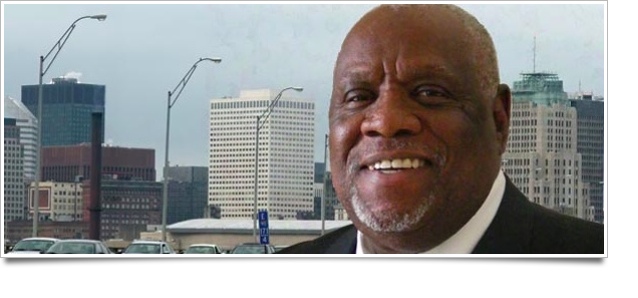
By Mansfield Frazier
When Peter Lawson Jones addressed the supporters of embattled Richmond Heights Mayor Miesha Headen (who is facing a tough recall election on Tuesday, September 23) he stated that when President Obama took office he had a right to appoint his own team — which is exactly what the new mayor did when she took office. The only difference is that howls of indignation arose from long-time residents when Headen, who has a strong background in finance, replaced Finance Director Paul Ellis, and eventually replaced the other three members of the department he ran.
While the recall, on the surface, is pitting older residents against newer ones (those who have lived in the city for less than 15 years), the old/new construct is merely euphemism for black/white. The fact is, anyone who had moved into Richmond Heights within the last 15 years is, in all likelihood, black. And that’s the crux of the matter: Richmond Heights is a city in transition, and, as in most cases with American cities, racial transitions are neither pretty nor smooth.
The simple fact is, no matter what Headen did when she took office the older residents were not going to like it or go along with her … even if the changes she made improved the city and its financial rating (something that has happened under her stewardship). This is all about maintaining the status quo.
But, unless the newer residents of Richmond Heights go to the polls and demonstrate their support for the new mayor, she will be recalled and the City Council president — who just happens to be white — will serve out the remainder of her term. But even if Headen does lose the recall election the older residents are only forestalling the future; the mayor of Richmond Heights will, probably in the next election in three years, again be black, and probably, again, will be Miesha Headen.
Here’s why: When cities like Richmond Heights begin the transition from black to white, racists begin making the specious argument that soon it’s going to become the next East Cleveland … but by making those kind of statements all they are doing is dissuading any additional whites from moving in. Since Richmond Heights is now almost half black, in three years it’s going to be majority black, and, it will not turn into East Cleveland as the haters predict.
The same thing was said about Warrensville Heights, Garfield Heights, and Maple Heights when they were in transition, but what causes inner-ring suburbs to destabilize is not the race of the newcomers, but the presence of renters. When fleeing whites turn their properties into rental units the housing stock deteriorates, no matter the race of the tenants (who usually happen to be black).
Richmond Heights is simply the latest ugly manifestation of racial tensions that flare when whites don’t buy into the notion of a colorblind, post-racial society. If the housing market had not crashed five or six years ago most whites in Richmond Heights would have been long gone by now. The ones that are staying simply cannot afford to move, it’s not that they believe in integration.
But, as Frederick Douglass said, “Power concedes nothing without a demand, it never did and it never will.” All Meisha Headen is doing is making her demand via the ballot box; it’s up to the good citizens of Richmond Heights to determine if she’s going to be heard now, or heard later. But make no mistake, to paraphrase abolitionist William Lloyd Garrison “she will be heard!”
 From Cool Cleveland correspondent Mansfield B. Frazier mansfieldfATgmail.com. Frazier’s From Behind The Wall: Commentary on Crime, Punishment, Race and the Underclass by a Prison Inmate is available again in hardback. Snag your copy and have it signed by the author by visiting http://NeighborhoodSolutionsInc.com.